Technical Data Sheet

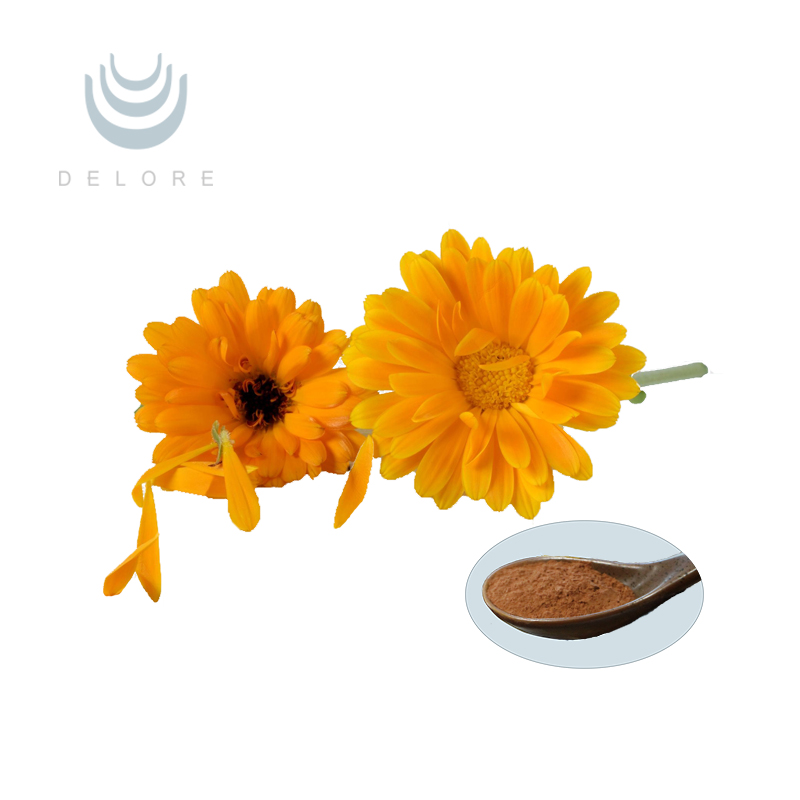
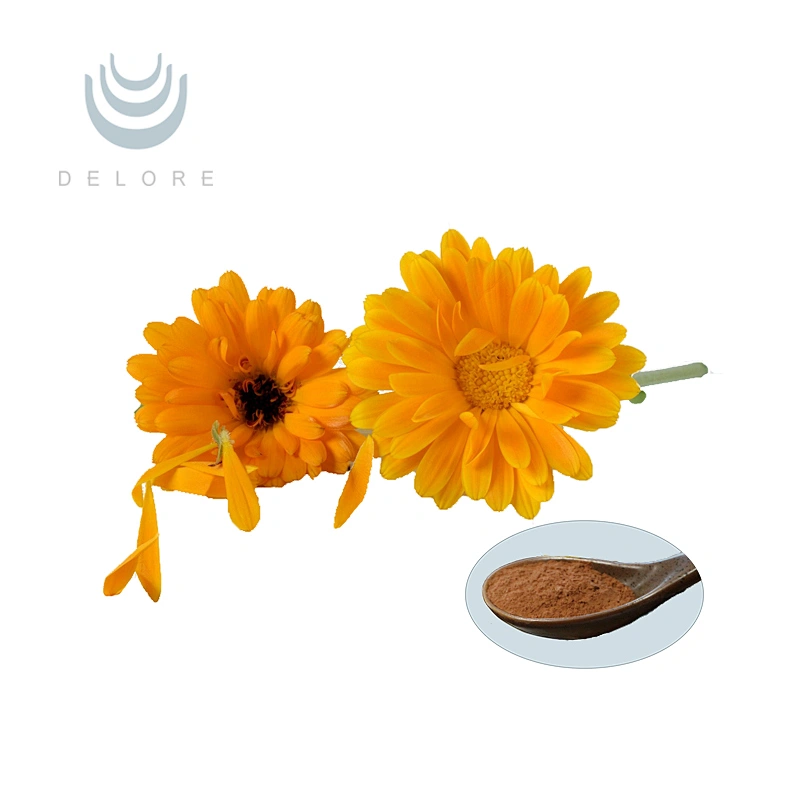
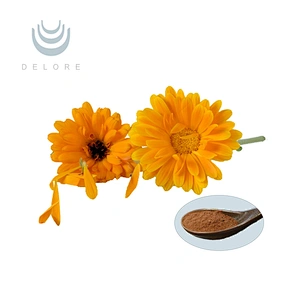
| Product Name | Marigold Extract  |
| Latin Name | Tagetes erectaL |
| Part of Plant | Petal |
| Active Ingredient | Zeaxanthin Powder 5%-73% HPLC/UV |
| CAS NO. | 144-68-3 |
| Chemical Formula | C40H56O2 |
| Solubility | Zeaxanthin is insoluble in water, ethanol (0.3%), slightly soluble in n-hexane, soluble in chloroform, ethyl acetate. |
| Stability | It has good oxygen resistance, is more stable for other ions, acids, alkalis and reducing agents such as Na2SO3, etc.; the low temperature is more stable, the high temperature is basically stable for short time, and the stability of Fe and Al is poor; in the visible and ultraviolet light regions, light has a greater impact on the stability of zeaxanthin; the zeaxanthin present in solid food is more stable under normal temperature and natural light conditions, and the 1% solution is more sensitive to sunlight. |
| Description | Zeaxanthin is a new type of oil-soluble natural pigment that is widely found in green leafy vegetables, flowers, fruits, goji berries and yellow corn. In nature, it is often coexisted with lutein, β-carotene, cryptoxanthin, etc., forming a mixture of carotenoids. |
| Package | 25kg fiber drum with sealed inner polyethylene liner |
| Shelf-life | 24 months, if tightly sealed in a cool and dry place |
| Certificates | ISO22000, HACCP, KOSHER, HALAL, Organic Certificates |

| Dietary Supplemets | In the human body, zeaxanthin is a strong antioxidant that can also protect the body's tissue cells by quenching oxidation behaviors such as single-line oxygen and scavenging free radicals, thereby protecting biological systems from some potentially harmful effects due to excessive oxidation reactions. ⭐Anticancer Zeaxanthin, like many carotenoids, is resistant to cell and organ damage caused by free radicals in the human body. Studies have shown that zeaxanthin is more effective than β-carotene in inhibiting the automatic oxidation of cellular lipids and preventing cellular damage caused by oxidation, and the peroxidation of cellular lipids is associated with tumor growth, indicating that zeaxanthin has the effect of reducing the occurrence of cancer and enhancing immune function. ⭐Prevention of cardiovascular disease Studies have reported a lower risk of cardiovascular disease (Angiocardiopathy) in people with a high daily intake of carotenoids. The researchers found that zeaxanthin can inhibit the oxidation of low-density lipoprotein (LDL) under in vitro conditions, and zeaxanthin can significantly reduce the incidence of myocardial infarction and help slow down the arteriosclerosis process. ⭐Prevention of cataracts Zeaxanthin is one of only 2 carotenoids in the lens, with 11 conjugated double bonds in its molecule and hydroxyl groups on the tail end, a structure that gives it a strong antioxidant capacity. As a strong antioxidant, it can quench the triple state of single-line oxygen and photosensitizer, remove damaging oxygen radicals, prevent membrane lipid peroxidation, reduce the formation of lipofuscin, and thus prevent the formation of cataracts. Studies have shown that people with high lutein and zeaxanthin intake are 19% to 22% less likely to develop cataracts than those with low intakes. ⭐Prevention of age-related macular degeneration If there is no normal functioning macular area, the main visual function of the person will gradually be damaged, and there is even a risk of blindness. At the center point of the macular area, the incident light is the strongest and the most reactive oxygen species are produced. Numerous epidemiological studies have also shown that zeaxanthin has a specific effect on absorbing the most damaging blue light in the retina, thereby protecting the cone cells in the central fovea of the retina. Many studies have shown that increasing the intake of zeaxanthin in the short term can increase macular pigment, thereby enhancing the ability of the macular area to fight harmful substances and light-ray damage, preventing and slowing age-related macular degeneration. |

| Item | Standard | Test Method |
| Assay | Zeaxanthin≥5% | HPLC |
| Appearance | OrangeRed Crystalline Powder | Visual |
| Odor | Characteristic | Organoleptic |
| Particle Size | ≥95% pass 80 mesh | Ch. P. C. Rule 47 |
| Loss on Drying | ≤5.00% | Ch. P. C. Rule 52 |
| Ash | ≤5.00% | Ch. P. C. Rule 2302 |
| Heavy Metals | ≤10mg/kg | Colorimetric method |
| Arsenic (As) | ≤3mg/kg | Ch. P. C. Rule 21-ICP-MS |
| Lead (Pb) | ≤2mg/kg | Ch. P. C. Rule 21-ICP-MS |
| Mercury (Hg) | ≤2mg/kg | Ch. P. C. Rule 21-ICP-MS |
| Cadmium (Cd) | ≤2mg/kg | Ch. P. C. Rule 21-ICP-MS |
| Ethanol | ≤500mg/kg | GC-MS |
| Total Plate Count | ≤5000CFU/g | ISO 4833-1:2013 |
| Total Yeast & Mold | ≤500CFU/g | ISO 21527:2008 |
| Coliforms | ≤10CFU/g | ISO 21527:2008 |
| Salmonella | Negative | ISO 6579-1:2017 |

| Supplier's Name | Hunan Delore Natural Products Co., Ltd  |
| Supplier'sEmail | info@delore.cn |
| Supplier'sWebsite | www.delore.cn /www.deloresolutions.com |
| Supplier's Address | Bld#7B, Depu Parkview Green, Changsha, Hunan, 410100, China |

Send Message
Related Products
Model NO. Curcumin 95%~98%
Model NO. Lutein(Xanthophyll) Powder
Model NO. Bilberry Extract